Modernize Emergency Power Standards to Protect Patients
Support Center for Medicare Medicaid Services (CMS) acceptance of NFPA 110 (2025) to strengthen hospital emergency power reliability and save lives.

15+ years old
Current CMS standard references NFPA 110 (2010)
 #1 Failure Point
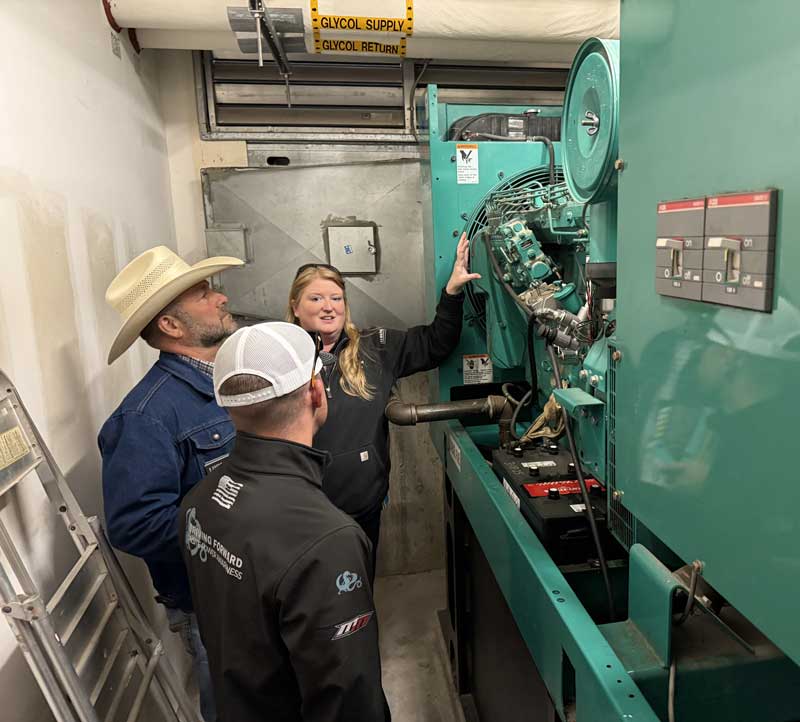
Starting batteries are the leading generator failure source
 Patient Safety
Reliable emergency power protects critical care operations
This initiative is supported by

Modernize Emergency Power Standards to Protect Patients
Support Center for Medicare Medicaid Services (CMS) acceptance of NFPA 110 (2025) to strengthen hospital emergency power reliability and save lives.
15+ years old
Current CMS standard references NFPA 110 (2010)
#1 Failure Point
Starting batteries are the leading generator failure source
Patient Safety
Reliable emergency power protects critical care operations
This initiative is supported by
What is NFPA 110?
NFPA 110 was developed to create clear, reliable standards for backup power systems that keep critical operations running when normal electricity fails. Since 1985, it has been continuously updated to reflect advances in technology, lessons learned from real-world use, and evolving safety expectations—covering everything from system performance and testing to fuel, batteries, and maintenance practices. Today, NFPA 110 serves as the foundational standard for ensuring that emergency power supply systems are designed, installed, and maintained to perform when they are needed most.
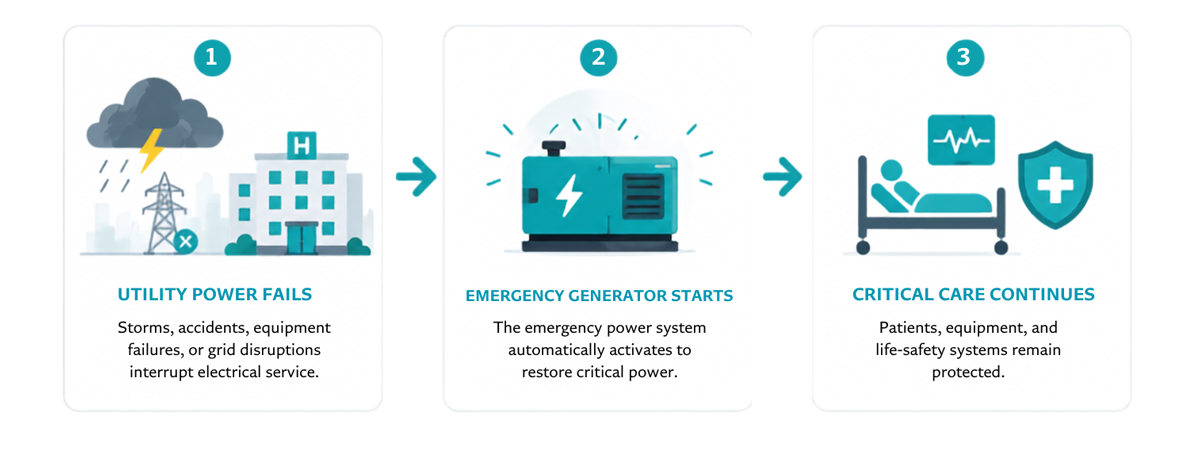

NFPA 110 establishes the requirements that help ensure this process works, especially when lives depend on it.
What is NFPA 110?
NFPA 110 was developed to create clear, reliable standards for backup power systems that keep critical operations running when normal electricity fails. Since 1985, it has been continuously updated to reflect advances in technology, lessons learned from real-world use, and evolving safety expectations—covering everything from system performance and testing to fuel, batteries, and maintenance practices. Today, NFPA 110 serves as the foundational standard for ensuring that emergency power supply systems are designed, installed, and maintained to perform when they are needed most.
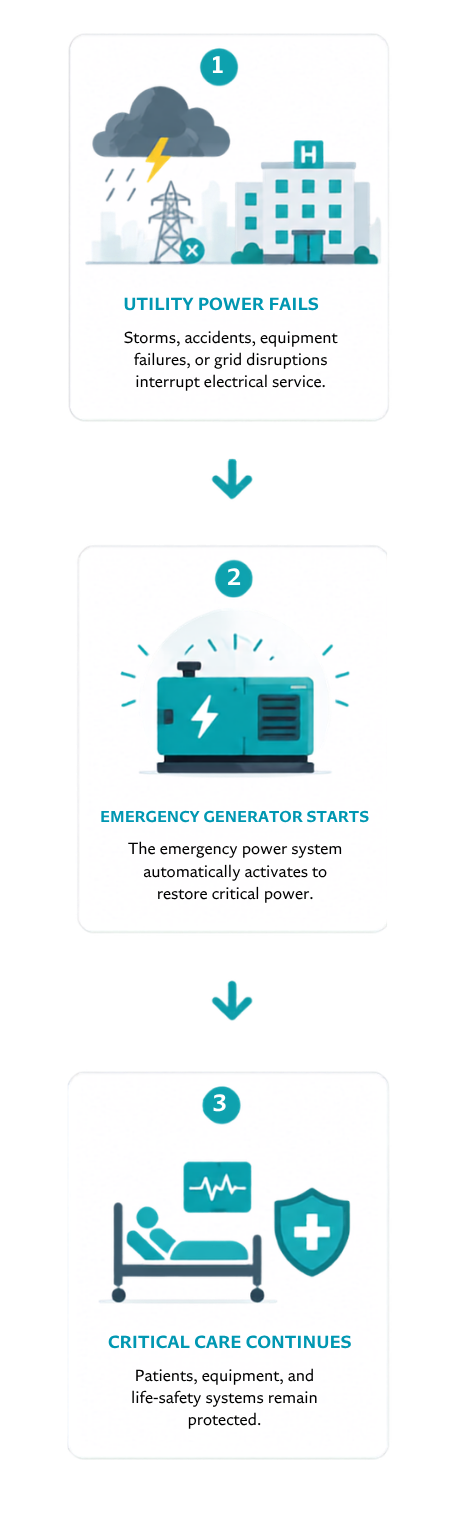
NFPA 110 establishes the requirements that help ensure this process works when lives depend on it.
THE PROBLEM
Healthcare Facilities Depend on Emergency Power
Healthcare facilities across the country depend on emergency power systems to sustain life‑saving care during power outages. When those systems fail, the consequences are immediate— disruption of critical care, compromised patient safety, and potential loss of life. This includes all facilities that receive funding from CMS (i.e., hospitals, long‑term care facilities, surgery centers, skilled nursing facilities, assisted living communities, etc.).
Yet today, CMS‑regulated healthcare facilities are required to comply with standards that reference NFPA 110 (2010)—a framework developed more than fifteen years ago.
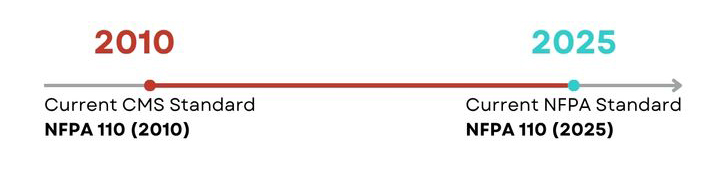
15
YEARS
BEHIND
Current Technology and Reliability Advancements
THE GAP
Why This Matters Now

Other Critical Infrastructure Has Moved Forward
Other critical infrastructure sectors who do not receive CMS funding—including Veterans Affairs medical centers, data centers, and municipalities—are already permitted to use newer editions of NFPA 110 and adopt modern technologies that improve system reliability and resilience.

Healthcare Facilities Face the Same Risks
Healthcare facilities like hospitals face the same risks during power outages—but they do not have access to these important advancements that enhance reliability and performance.

Future Updates Still Leave a Gap
Even future CMS updates would only advance to NFPA 110 (2019), leaving out the most significant reliability improvements introduced in the 2025 edition.
THE RISK
 This Is Not a Theoretical Issue.
- Starting batteries are widely recognized as the leading point of failure in emergency generator systems.
- Current requirements limit hospitals to outdated battery technologies—directly increasing the risk that generators will fail to start during an emergency.
- When that happens, the ability to sustain life-support systems is put at risk.
#1
FAILURE POINT
IN EMERGENCY GENERATORS
STARTING BATTERIES
THE SOLUTION
NFPA 110 (2025) Delivers Proven Reliability Improvements

Multiple Battery Technologies
Allowing multiple proven battery technologies that improve system reliability and performance.

Addresses Known Failure Points
Updates designed around real-world generator performance and known failure mechanisms.

Reliability-Centered Maintenance
Focuses on demonstrated system performance instead of outdated prescriptive requirements.
THE ASK
The Request to CMS Is Clear
There is an urgent need for CMS leadership to accept the proposed categorical waiver allowing healthcare facilities to comply with NFPA 110 (2025).
This is not a discretionary request–it is a matter of life safety.
- Improve emergency power reliability in hospitals
- Reduce preventable generator failures
- Strengthen patient safety during power outages
- Modernize healthcare infrastructure
Add Your Voice
Whether you are in the industry or an individual who utilizes our healthcare network, join us in supporting the adoption of NFPA 110 (2025) for CMS-regulated healthcare facilities.
Complete the form to formally support CMS acceptance of NFPA 110 (2025) for healthcare facilities.

Healthcare facilities should not be held back by outdated standards when proven solutions exist today.
Advancing NFPA 110(2025) is a practical, immediate step toward stronger emergency preparedness and better patient outcomes.